The Gendered Reality of Job Seeking: The Smart Works Index 2025

The Smart Works Index is a data-led report on the realities shaping women’s routes into work across the UK. Now in its fourth year, the Smart Works Unemployment Index provides detailed, human-centred insight into the experiences of unemployed women in Britain.

The Smart Works Index 2025

Executive Summary and Key Findings

Drawing on quantitative data from over 4600 clients and focus group, this Index highlights hiring approaches that are shutting women out, and with that, creating long-term consequences for their financial security, wellbeing and opportunity. Three defining trends shape women’s job-seeking experiences in 2025.  

1. Effort is rising, but opportunity is not

Women are applying widely and persistently, yet hiring practices overlook women, resulting in a less diverse talent pool. It takes an average of 42 applications to secure the interview that leads to a job. Processes are increasingly automated, complex and unresponsive, with many receiving no feedback at all.

2. Confidence is being eroded by the job search process

63% of women say they feel less confident as a result of trying to find work. Women describe a job search shaped by silence, unclear expectations and repeated rejection, which steadily undermines confidence over time.

3. Existing inequalities persist across the job search experience

Women with disabilities report the steepest declines in confidence during the job search process. Despite applying for more roles on average, women from ethnic minority backgrounds see lower job success outcomes than their white counterparts, while parents are the most likely to be unemployed for longer.

The Smart Works Index In Numbers

The process of job seeking is demanding more than ever. Across thousands of women in our dataset, one pattern is clear:
women are investing significant time and effort into applications, yet the recruitment system is not designed with their circumstances in mind.
42
on average, women apply to 42 jobs before they come to Smart Works
1 in 3
women apply for 50+ roles
63%
of women feel less confident as a result of the job search process
41%
of Smart Works clients have been out of work for over 12 months
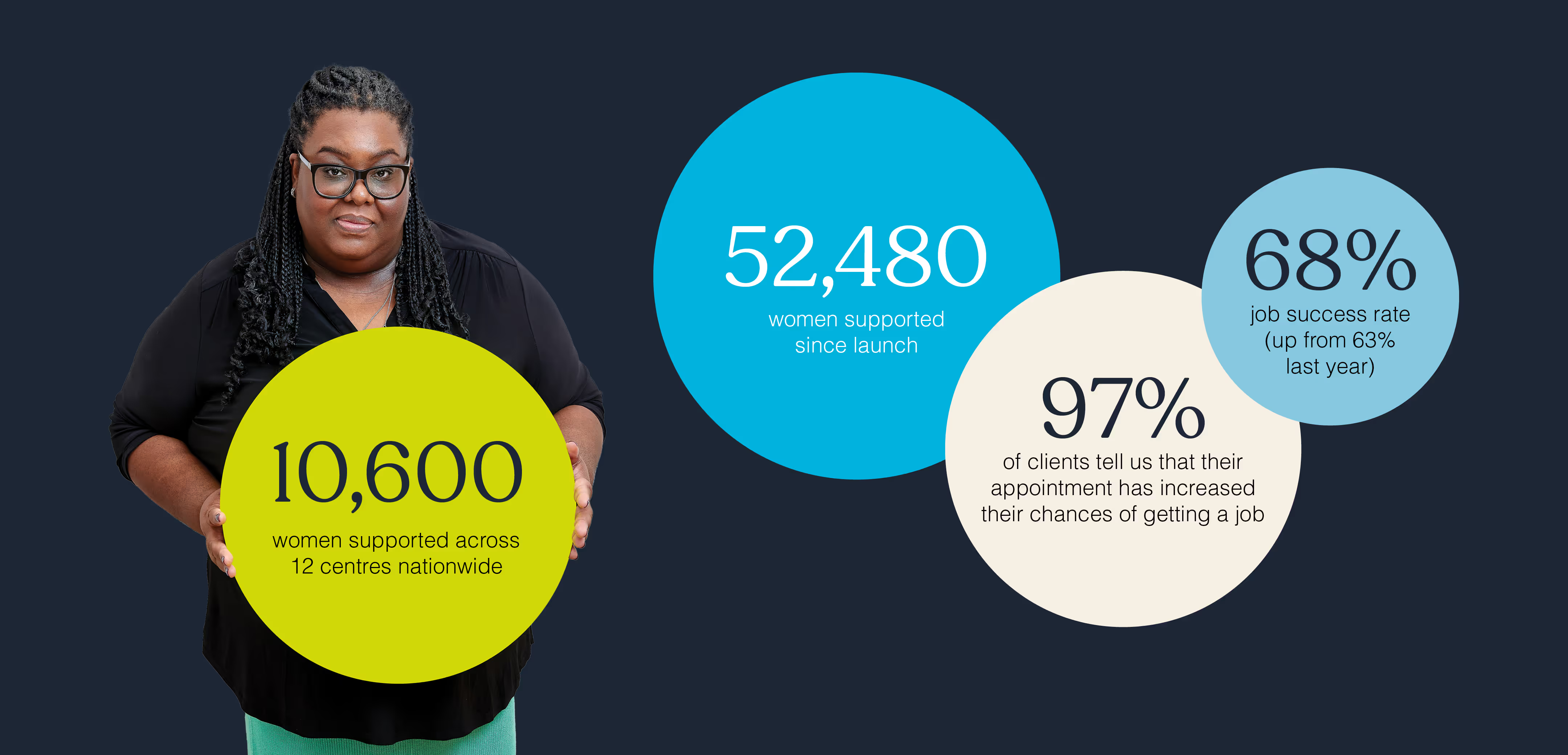
68%
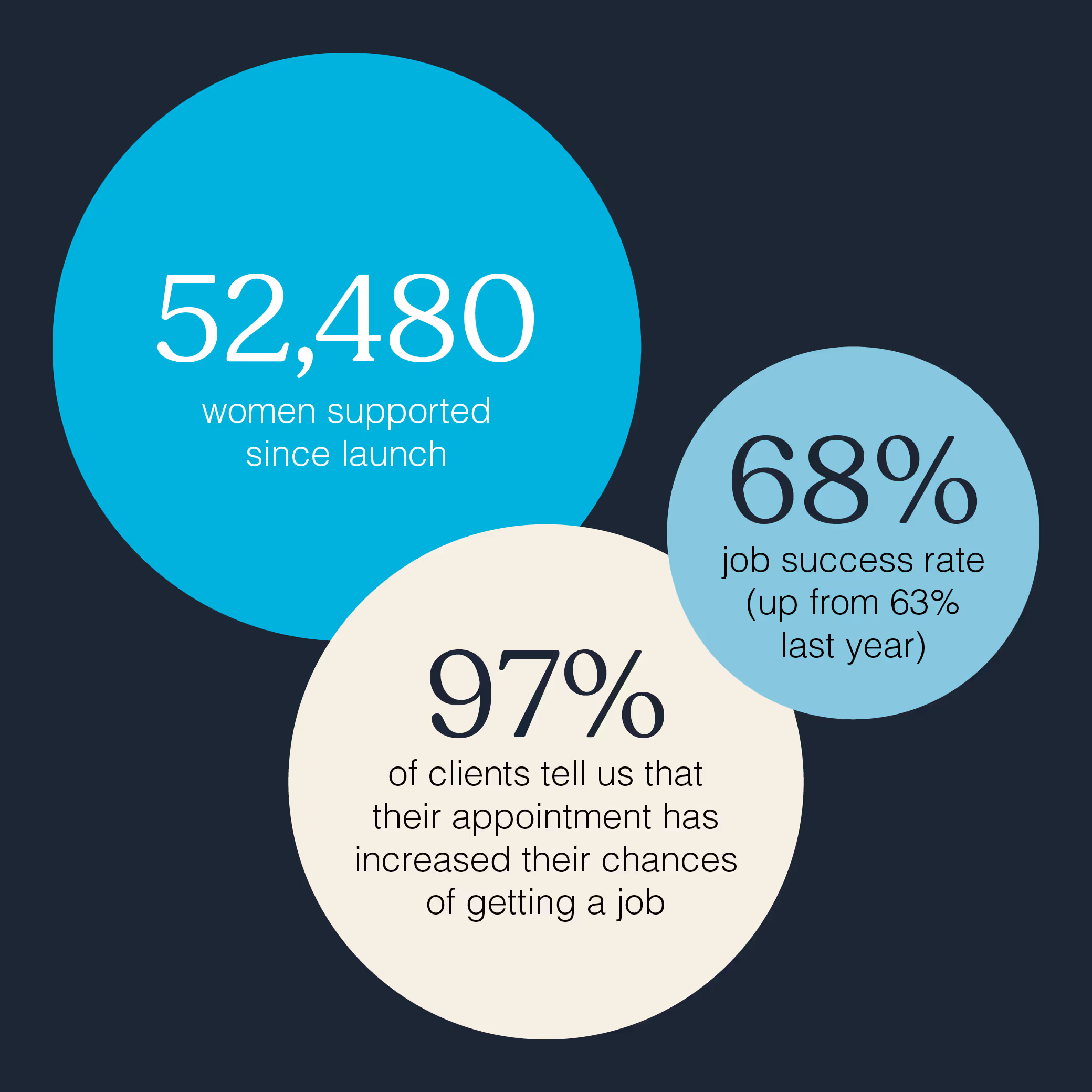
of Smart Works clients secure employment or training

Our clients: hear their voices

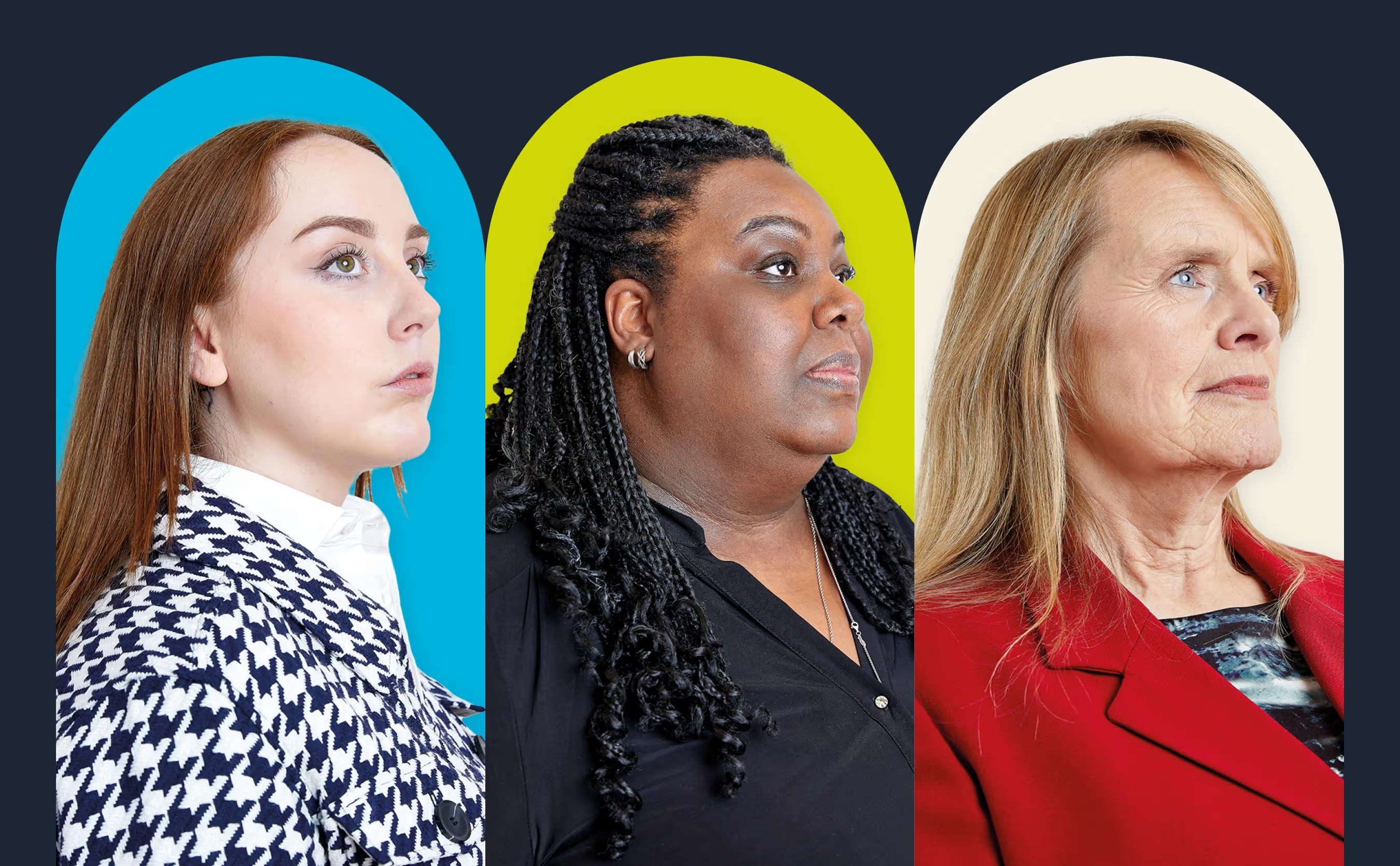
Stephanie, 22
London

"No matter how hard I tried, I felt invisible - just a young, neurodivergent woman from a working-class background, competing in a male-dominated industry that barely saw me.”

Even as I finished my degree, I knew how tough the job market was. Entry-level architectural roles often require more experience than a new graduate can realistically have. Many practices were only hiring students ready for the next stage of qualification, leaving little room for someone like me starting out.

Some opportunities were misleading. For many architecture roles, listings didn’t even provide the company name or clear location. The gap between what I’d achieved - my degree, portfolio, skills and the lack of recognition was stark. I felt invisible.

Digital recruitment, unrealistic experience requirements and subtle biases make it incredibly hard for early-career candidates to be seen. Employers must recognise that talent is broader than CV keywords.
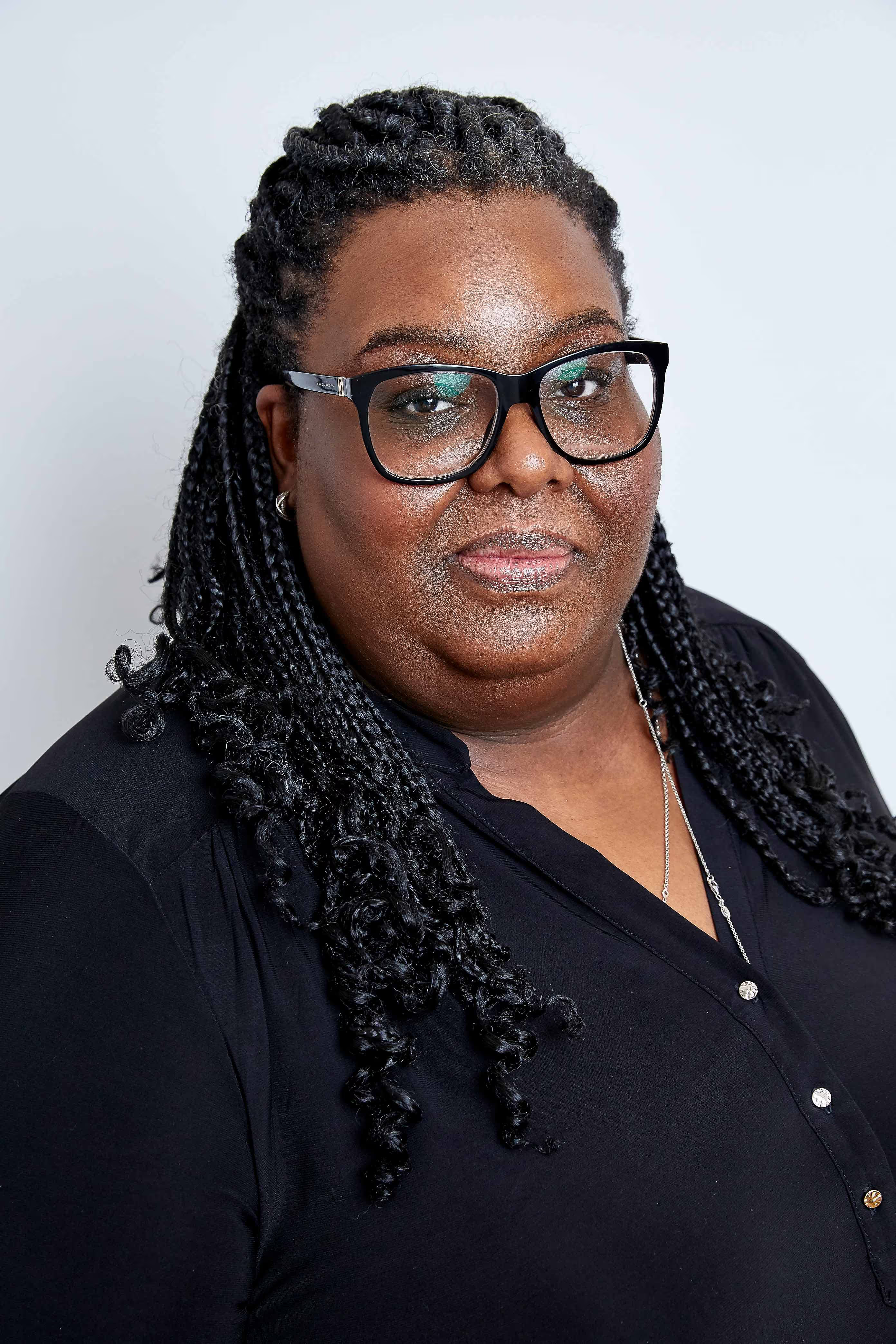
Shantelle, 43 Harrogate

“I’ve applied for over 150 jobs in two years. Yet every rejection reminds me the odds are stacked against people like me.”

I live in North Yorkshire. For the past two years, I’ve been searching for work. During that time, I’ve had a few short-term roles, but nothing lasting. It’s been frustrating and exhausting. I feel like I’ve failed in some ways, owning a home, managing bills, accommodating my health needs and paying for alternative therapies that are not provided by the NHS - but my contributions have stalled.

I’m Black, disabled, and large, and navigating the job market often feels impossible. When I was employed, I approached applications methodically. I tracked every role I applied for, stopping only after 150 applications in six months. Each one took time - half a day, sometimes a full day, because I tailored my CV and cover letter. I am very meticulous. If I’m applying for a job, I’ll go through the job description line by line, make sure my CV matches, tweak my cover letter, and then submit.

Despite all this effort, responses were inconsistent. Agencies often ghosted me, especially when my applications didn’t generate profit. Feedback was usually generic: “Thank you, but we’re not moving forward.” Even after interviews, positive feedback didn’t translate into offers. You feel good about yourself for a moment, but then there’s nothing actionable. You’re left wondering what went wrong.
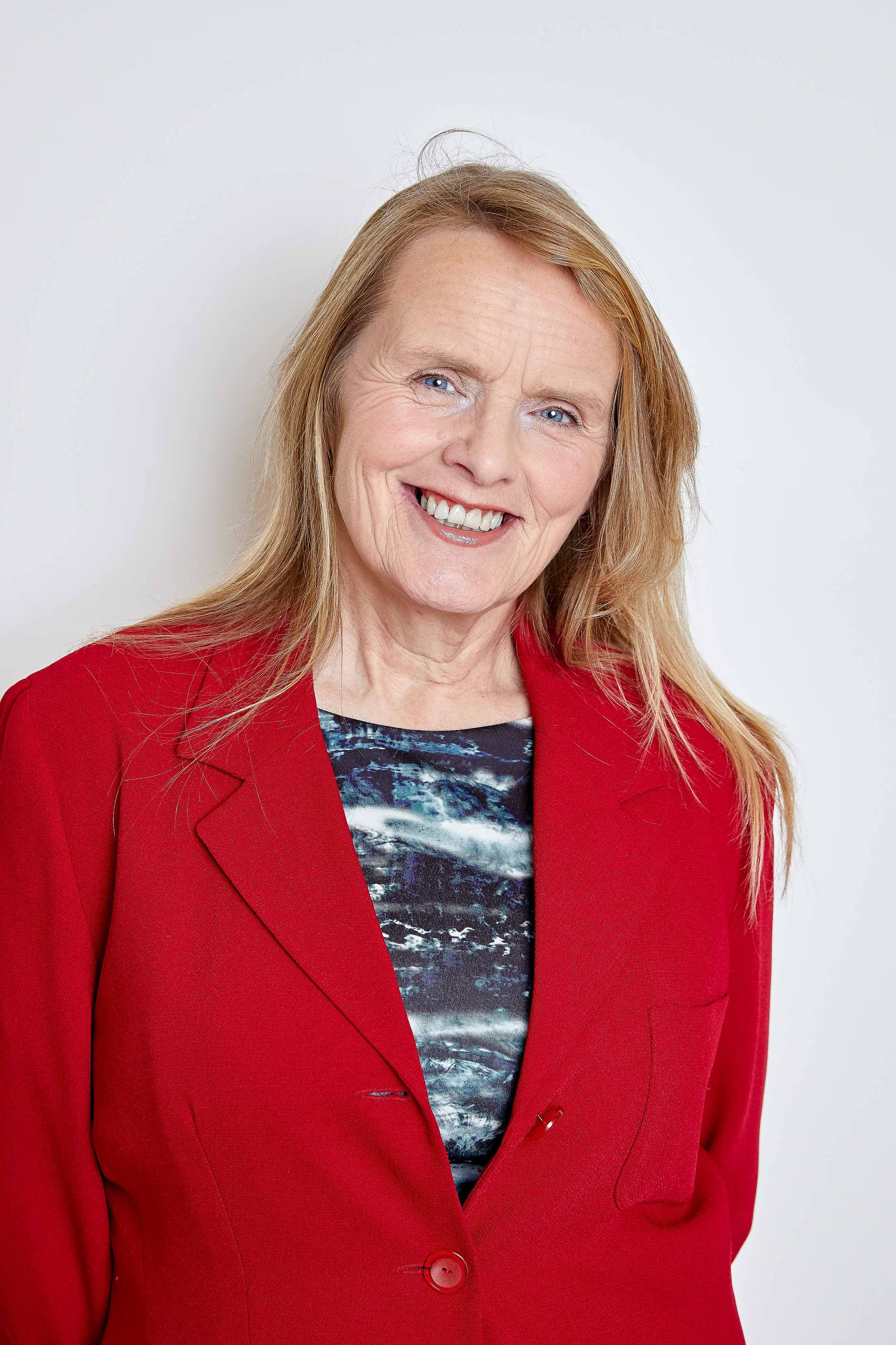
Andrea, 60 Oldham

“I didn’t realise the biggest reinvention would come at 60.”

I turned 60 last week. I’ve had a long and varied career. For most of my life, I worked in the leisure industry - running nightclubs, bars, pubs and live venues. In my late forties, I made a big pivot and joined the police. Joining the Met gave me brilliant experience, especially in licensing and modern slavery. But policing wasn’t quite what I hoped it would be.

Eventually, I came back to what I knew best: people. I started looking for part-time or flexible roles, anything where I could bring my experience into a new chapter. The way job hunting works now has completely changed. It used to be simple: a CV, a phone call, or the local paper on a Thursday. Now it’s endless websites, repeated listings, algorithms, and being dragged off in the wrong direction if you click on the wrong thing.

Even with decades of experience, I couldn’t get a job in a supermarket. It didn’t make sense. You’d think employers would value older workers more - reliability, stability, commitment - but it didn’t feel like that at all.

Blind applications helped. When they strip out your age, gender, background, everything, you feel like you’re being judged on your skills alone. But the minute you get to interview, it’s no longer blind. People still make assumptions.
left arrow
right arrow

The Smart Works effect: when women get the right support, they succeed.

Despite the toughest labour market since this Index began, Smart Works clients continue to secure jobs at consistently high levels.
Our model proves something essential: Support works. Human connection works. Being seen works.

In 2025, our job success rate rose from 63% to 68% even as women applied for more jobs, faced more rejection, and spent more hours searching than ever before.
This is not happening despite the challenges of the job market.
It is happening because the Smart Works model gives women what prevailing recruitment practices do not.

What Smart Works offers

1. Human contact
Real conversation, empathy and guidance, everything the online process removes.
2. Tailored support
Coaching that reflects each woman’s strengths, circumstances and goals.
3. Confidence building
Evidence from 94% of clients shows the transformative impact of being seen and believed in.
4. Skills translation
Helping women articulate transferable skills so they are not overlooked by automated systems.
5. Interview preparation
Mock interviews, personalised feedback and practical guidance that the system does not provide.
6. Visible empowerment
Professional clothing that reflects competence, credibility and self-belief.
7. Emotional scaffolding
Support that helps women absorb rejection, regain motivation and keep going.
8. Professional presentation
Equipping women with the tools, verbal, non-verbal and visual to present their best selves.
We need your support
In a fair labour market, Smart Works would not need to exist.

But in 2025, as competition intensifies and women’s confidence collapses, our service is not just relevant, it is essential. Women are doing everything asked of them. They are showing up, trying again after every rejection, and still being shut out. Smart Works is the difference between a woman giving up and a woman getting the job. Despite the worsening job market, 68% of Smart Works clients secure employment or training. This is not luck. It is the impact of targeted preparation, expert coaching and a moment of human connection at exactly the right time.

Demand for our service continues to grow. To meet this, demand Smart Works must:
reach more women, in more communities
train and support more volunteers
invest in our wardrobe and coaching teams
expand our centres, so distance is never a barrier
strengthen our voice, so the system changes too
We can only do this with supporters and partners who believe in women’s potential as strongly as we do. Partner with us. Donate. Stand with women.  

Smart Works exists because fairness does not. With your partnership, we can help build a future where it does.

Subscribe to our newsletter

Get access to inspiring stories from our service, exclusive offers from our retail partners and invites to our iconic events. See how you can be part of the change.

Thank you, your sign-up request was successful!
Please check your email inbox to confirm.
Oops! Something went wrong while submitting the form.